MASSAGE + ALCOHOL = BAD IDEA

We all deserve the chance to relax after a long week, and a beer (or three) followed by a soothing massage might sound like a perfect recipe for relaxation.

Untitled design-2.jpg

But if your daydreams involve both a few drinks and a massage therapy session, you should understand that massage therapists don’t really approve the combination of  too much booze and a massage.

While there are varying opinions on how long you should wait after drinking to get a massage, massage therapy experts agree that it’s not safe to massage a client when they are drunk, they have a hangover, or they are thinking of drinking a lot after the session.

Before or after massage, drinking can have different effects into your body, and we will explain why is that and why you shouldn't mix this two factors.

How massage affects your body

  • Massage boosts circulation, pushing the body’s lymph fluid around and helping you to shed excess fluids more quickly. (This is why your therapist will encourage you to drink plenty of water after a massage.)

  • Massage creates a state of deep relaxation, lowers your blood pressure, reduces levels of stress hormones like cortisol and increases pleasurable hormones like dopamine and serotonin in the body.

These effects of massage alone can be a great thing, but when combined with alcohol can be dangerous. Some massage therapists even report seeing clients get "re-drunk" after a massage. Your time spent in your massage chair should leave you feeling relaxed, healthy, and rejuvenated—not sick or in more pain!

How alcohol affects your body

  • Alcohol, a diuretic, is well-known for its dehydrating effects, as anyone who’s ever had a hangover headache will tell you.

  • Alcohol causes your blood vessels to dilate, moving the alcohol through your bloodstream and increasing your blood alcohol level.

  • Alcohol impairs cognitive reasoning. Alcohol consumption can impair reflexes, limit motor control, and reduce coordination.

  • Drinking too much weakens the body’s immune system, and a single event of binge-drinking can limit your body’s ability to prevent infections for up to 24 hours
drunk.gif

How massage interacts with alcohol

  • Numbed senses. Alcohol and massage are both relaxing. But Alcohol tends to desensitize the nerve endings and reduce the sensation of touch, making it difficult for you and your massage therapist to judge the best level of pressure and the person may be unable to give appropriate feedback. You want to feel the massage, don’t you?

  • Amplified drunkenness. Alcohol travels through your bloodstream. (We know, it doesn’t sound as much fun when we say it that way.) Massage increases circulation, which means that alcohol both hits your bloodstream more quickly and remains there longer.

  • Compromised Judgment & Thinking: We're taught that alcohol affects our judgment. It increasing levels of norepinephrine, the neurotransmitter responsible for arousal and heightened excitement, and an increase in impulsivity as well as a reduction in impulse control. Additionally, alcohol dulls the prefrontal cortex of the brain, the area responsible for decision making and rational thought that also has control over aggressive behavior.

  • Decreased Motor Activity & Physical Coordination: Because alcohol lowers energy consumption in the cerebellum, which controls your motor activity and overall physical coordination, you can't be certain of your behavior while under the influence. Best to avoid embarrassing—or worse—harmful behavior during an activity that is supposed to be relaxing.

  • Intensified hangovers. Both massage and alcohol can have a dehydrating effect. This doesn’t just make you thirstier – it can intensify hangover symptoms. There's a reason that drinking water after a massage is highly recommended. Massage is believed to increase movement of fluids, which could also expedite the body's process of breaking down and excreting the alcohol, which in turn could enhance the severity of a hangover and you´ll be thhhhhirsty!

tenor.gif

The key is moderation.  Alcohol, like massage, has a powerful effect on your body.  When you are intoxicated or under the influence, the two don’t mix together in a healthy manner.

Long story short, (too much) alcohol and massage don’t mix well.  Feel free to have a glass of wine pre/post-massage, but keep the Oktoberfest-style beer binge for another day!


Neck pain vs Cycling

We left the slopes back in the past and we give way for the mountain bike season during the warmer months in Queenstown.

But… One of the most common injuries/pain related with cycling is neck pain.

This is because it is an activity that requires you to stay for long periods of time in an unnatural position. Cycling stresses your back in a flexed position, this coupled with needing to look where we are going means we compensate leaving the neck in an hyperextended position.

Mountain-Bike-image.jpg

This hyperextended position creates a change on the weight distribution through our muscles and spine. The deep neck extensors are tensed for a long time, blood flow to the area is decreased, becoming fatigued, getting stiffer. This leads to trigger points, muscles spams and potentially a bit of pain.


So, how can we fix neck pain caused by cycling?

  1. Correct fit of your bike.

  2. Professional treatment to ensure muscle and joint flexibility

  3. Regular stretching to maintain a healthy muscle length.

Let’s focus on Regular Stretching…

Regular stretching on cyclist will have immediate effects:

  • Accelerate recovery: Reducing muscle soreness and stiffness by increasing blood flow, delivering more nutrients to your muscles and removing lactic acid and metabolites.

  • Increased Oxygen Flow: Decreasing post-ride soreness with the added bonus of promoting cell growth and organ function.

  • Relaxation: can give both you and your muscles time to relax. With stress or exhaustion, the muscles will begin to tighten. Stretching can encourage a release of endorphins and leave you feeling encouraged.

It will also have cumulative effects:

  • Prevent Tissue Degradation: Over time and with age, the body starts dehydrating and stiffening. On a cellular level, muscle fibres start developing cross-links with parallel fibers making them stick together. Stretching slows this process by stimulating the production of tissue lubricants and pulling the interwoven cellular cross links back into an ordered state.

  • Flexibility

  • Injury Prevention:  Stretching keeps the connections strong, treating and preventing injury, improving functionality and longevity.

  • Better Posture & Aerodynamics: Stretching the right muscles can help correct poor posture both on and off the bike. By lengthening tight muscles that pull areas of the body away from their natural position you can maintain proper posture without the desire to round the back or slouch.


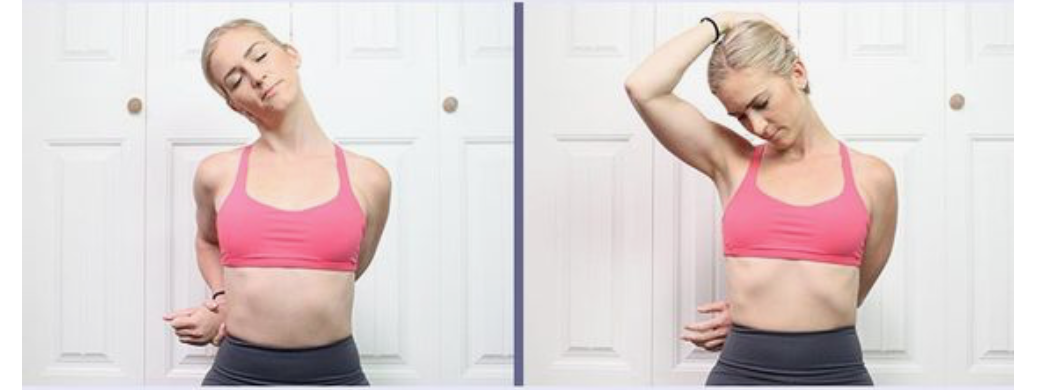
After all of this, you might wonder, what exercises/stretches are good for me?

Here we give you a couple of them that might help!

——————————————————————--Neck Rotation————————————————————————

——————————————————————--Neck Rotation————————————————————————

———————Upper trapezius Stretch ——————————————-Scapula Elevator Stretch————————-————————————————————20-25 secs each side———————————————————————-

———————Upper trapezius Stretch ——————————————-Scapula Elevator Stretch————————-

————————————————————20-25 secs each side———————————————————————-

—————————Lateral rotation ————————————-—————-Scalene Stretch———————————-—————-———3 times per side——————————————-——20-25 secs each side———————————

—————————Lateral rotation ————————————-—————-Scalene Stretch———————————-

—————-———3 times per side——————————————-——20-25 secs each side———————————


Feeling a bit cycle sore and want some professional attention? Book a massage therapy today!

Ankle: opposite of Aunty

If you've ever sprained your ankle, you'll know how important ankle mobility is. After a sprain, rehab to the ankle is a must. Instability and weakness aren't only detrimental to ankle function but will also cause anterior knee pain, weakness in your glutes, and heaps more of problems to boot.

But you're in luck cos I'm going to drop some knowledge bombs in the form of 8 critical stretches & moves to help get you back on track after a sprained ankle.

1 - CALF ROLL OUT 

Soft tissue mobility rollouts can be very beneficial to the dense muscle tissue that can become overactive. Try isolating one calf at a time and use a ball or foam roller to release the calves.

Place one leg on top of the other to apply pressure into the foam roller or ball. You can turn your foot in and out to find a spot that is stiffer.

Make sure you stay on the stiffer spots for one minute. You may find that you have a few spots along the muscle!

Hold for 1 minute for 2 sets.


2 - PLANTAR FASCIA ROLL OUT

The plantar fascia is tissue on the bottom of your foot that can affect the mobility of the ankle and foot. It can also become irritated and painful if it becomes too stiff and overstrains.

Our feet rarely have a chance to move with how often we wear shoes, heels, or sandals. To release this tissue, take a ball and roll it on the bottom of your foot.

You may notice one side is more sensitive to the pressure than the other. Roll on the plantar fascia for one minute & repeat twice.


3 - STRAIGHT LEG CALF STRETCH

The calf muscle consists of two muscles, the gastrocnemius and the soleus. Both play vital roles in calf and ankle mobility.

To target the gastrocnemius, you want to stretch your calf in a straight leg position.

Hold for 1 minute & repeat twice.


4 - BENT KNEE CALF STRETCH

Sometimes the gastrocnemius isn’t the muscle that is tight. To stretch the soleus, bend your knee (back leg) and keep your heel down.

Hold for 1 minute & repeat twice.


5 - ANKLE ROCKERS

The most common ankle joint to get stiff is the talocrural joint, which is the joint that is right where the ankle meets the foot.

When you flex your foot up or down, you are moving from the talocrural joint. The motion that typically becomes most restricted is dorsiflexion (pointing your foot up).

To target this joint, place one leg back and one leg forward with your forward leg flexed. Keeping your heel down, rock forward as far as you can on the front foot.

Rock back and forth for 10-20 reps for 1 set.


6 - INSIDE/OUTSIDE ANKLE ROCKERS

Rock 10-20 times in each direction. You might notice that you are a little more restricted in one corner versus another.

Rock 10-20 times for 1 set.


7 - ANKLE CIRCLES

Ankle circles are an overlooked exercise. They allow the ankle to get motion in the entire ankle.

Working in both the clockwise and counterclockwise directions will help ensure you cover enough area. Work each direction 10-20 times.

Clockwise: 10-20 reps for 1 set.
Counterclockwise: 10-20 reps for 1 set.

8 - PLANTAR FACSIA / TOE STRETCH

Many of the muscles that help flex and extend the toes pass the ankle joint to get to the end of the foot. Sometimes they can get locked up along that path.

Take your foot and pull your toes back. You may feel a stretch on the bottom of your foot. Hold for up to one minute.

Hold for 1 minute for 2 sets. 


With these eight exercises and a ball, you can mobilize your ankles anywhere. Next time you feel your ankles start to stiffen up, give this routine a try to get some mobility back!